
Today we use emoji almost every day — whether it's WeChat, TikTok, or X, emojis have become an indispensable part of everyday communication.
Emoji are internationally standardized pictographs defined and maintained by the Unicode Consortium, and they display correctly on any platform that supports Unicode.
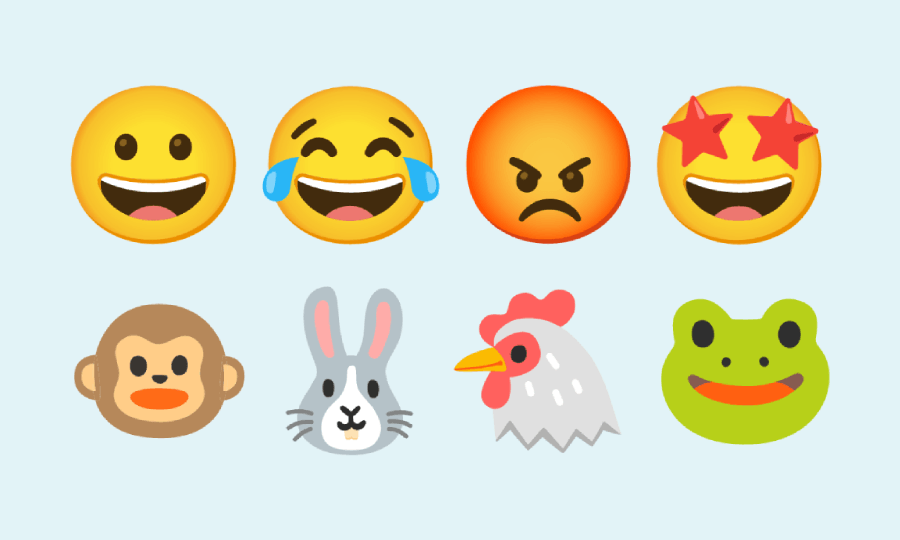 What is an emoji
The Unicode Consortium is a nonprofit organization founded in 1988 that develops, maintains, and promotes the Unicode Standard, providing unified digital encoding for every script and symbol in the world to enable cross-language and cross-platform text exchange and processing.
The word "emoji" comes from the Japanese "e" (picture) + "moji" (character) — literally, picture character. An emoji may look like an image, but it is actually a character. In essence, it is no different from "A" or "1": you can type it directly into text, or copy and paste it, which an image cannot do.
How to Pronounce "Emoji"?
The origin of "Emoji" is the Japanese word "絵文字" (えもじ), pronounced /emoꜜdʑi/. However, today emoji is no longer limited to Japan and has become an internationally universal vocabulary, so we generally use its English pronunciation.
The British pronunciation of emoji is ɪˈməʊ.dʒi, and the American pronunciation is ɪˈmoʊdʒi.
Where Did Emojis Come From?
1982: The First Internet Emoticon
At Carnegie Mellon University, Scott Fahlman typed :-) and :-( on an electronic bulletin board. These are generally regarded as the earliest internet emoticons in human history.
1999: The First Batch of Emojis
Shigetaka Kurita, a designer at the Japanese carrier NTT DoCoMo, designed 176 12×12 pixel emojis for the company's i-mode phones. The motivation was purely practical: plain-text conversation lacks tone and easily feels stiff, whereas adding an emoji makes a world of difference.
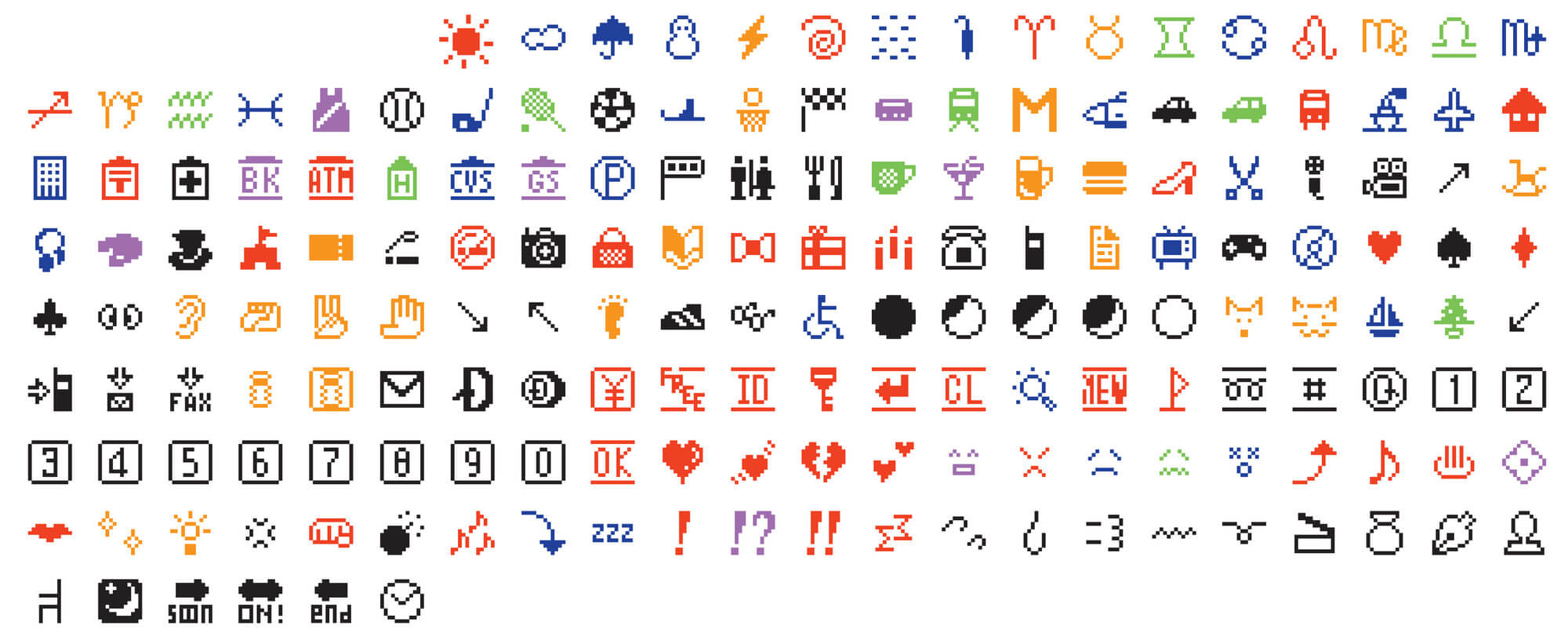 The first 176 emojis
2010 to Present: Standardized in Unicode
Unicode 6.0 incorporated emojis into the international standard character set, ending the chaos of vendors each designing their own proprietary encoding schemes. From then on, emojis became universal worldwide, and their count has climbed to more than 3,900 today (Emoji 18.0, released in September 2026, contains 3,972). Emojis quickly spread from being confined to a corner of Japan to a global phenomenon.
Why Does the Same Emoji Look Different on Different Phones?
Compare 😀 or 🏖️ on an Apple, Google, or Samsung phone. Although broadly similar, their art styles are completely different.
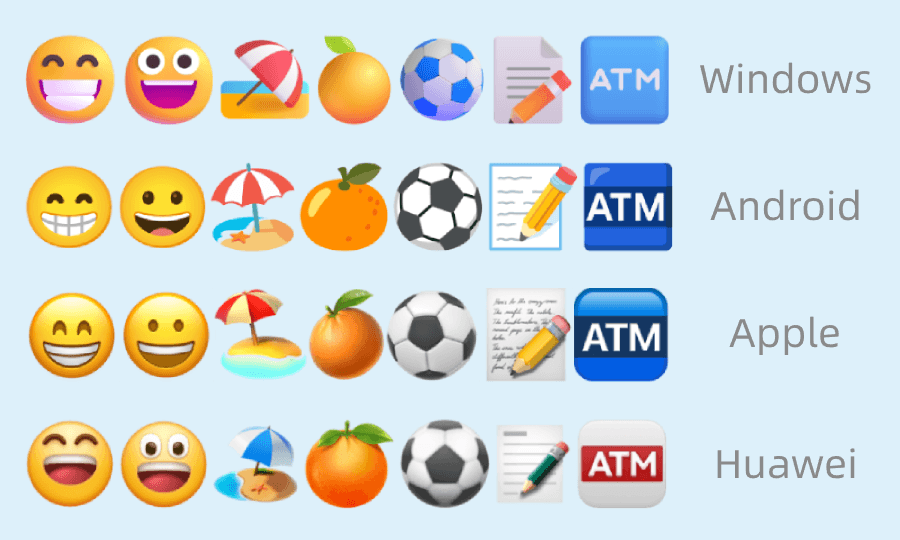 Platform Emoji Comparison
The reason is simple: the Unicode Consortium defines only two things — what the character is (for example, U+1F44D is the thumbs-up sign 👍), and its meaning. What it actually looks like is entirely up to each vendor. Therefore, Apple has its own style, Google and Microsoft have theirs, alongside open-source emoji fonts such as Twemoji, Noto Color Emoji, and OpenMoji.
Why Do WeChat and Douyin Stickers Differ from Emojis?
- Emojis are characters. They have Unicode code points, can be copied and pasted just like ordinary characters, and display correctly on any platform that supports Unicode.
- WeChat and Douyin custom stickers are images. They lack corresponding Unicode code points, meaning they only function within their respective apps and cannot be typed or pasted on other platforms.
What Have Emojis Changed?
- They supplement your emotions. The words "okay" convey no emotion on their own; paired with 😁 or 👌, your attitude is communicated clearly and accurately.
- They bridge language barriers. Whether you speak Chinese, English, or Japanese, 🍕 is pizza and ❤️ is a heart — instantly understood without translation.
- They make documents easier to read. Used appropriately in writing, emojis highlight key points and enhance readability. For example, ✅ denotes success and 📁 represents a folder.
📚 Further Reading & Useful Tools
- 🪛 Emoji Decoder: View the complete code point composition and rendering comparison of any emoji
- 📋 Quick Emoji Reference for Documents: A categorized quick reference for writing docs, READMEs, and PPTs
- 📖 From ":-)" to "😂": A Complete History of Emojis: A 44-year evolution history and key milestones
- 📖 Why Can the Same Emoji "Change Skin"?: Detailed explanation of the skin tone modifier mechanism
- 🌐 Official Full Unicode Emoji List